If you are in the market for a new home in Denver and you have the means to build, you are going to encounter two very different paths: custom home construction and production home construction. They are both marketed as ways to get a new home, but they are fundamentally different experiences that produce fundamentally …
If you are in the market for a new home in Denver and you have the means to build, you are going to encounter two very different paths: custom home construction and production home construction. They are both marketed as ways to get a new home, but they are fundamentally different experiences that produce fundamentally different results.
Understanding the difference before you make a decision can save you from a mismatch between what you expect and what you actually get. This guide lays out what separates a custom home from a production home, what each path costs, what the trade-offs are, and how to figure out which one is right for your situation.
What Is a Production Home?
A production home is built by a volume builder who constructs many homes simultaneously, typically in planned communities or subdivisions. The builder owns or controls the land, has a set of pre-designed floor plans, and builds the same designs repeatedly with variations in elevation, color package, and optional upgrades.
Production builders operate at scale. They buy materials in bulk, use the same subcontractors across many projects, and have refined systems for building efficiently. That efficiency is what allows them to offer new construction at a lower price per square foot than a custom builder.
When you buy a production home, you are choosing from a menu. You pick a floor plan, a lot in the community, an exterior elevation, and a set of interior finish packages. The major decisions have already been made. Your role is to select within the options the builder has pre-approved.
What Is a Custom Home?
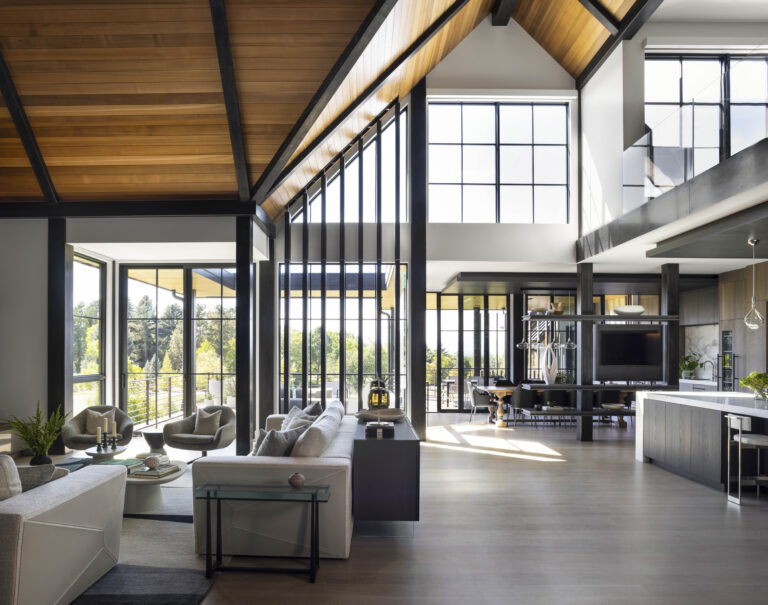
A custom home is designed and built specifically for you, for your lot, and for how you want to live. There is no floor plan catalog. The design starts from scratch with your program, your preferences, and your site as the starting point. Every decision, from the footprint to the ceiling details, is made for your project.
Custom home builders typically work on one project at a time or a small number of projects simultaneously. The builder has a deep involvement in every phase of the project, and the homeowner is an active participant in decisions throughout the design and construction process.
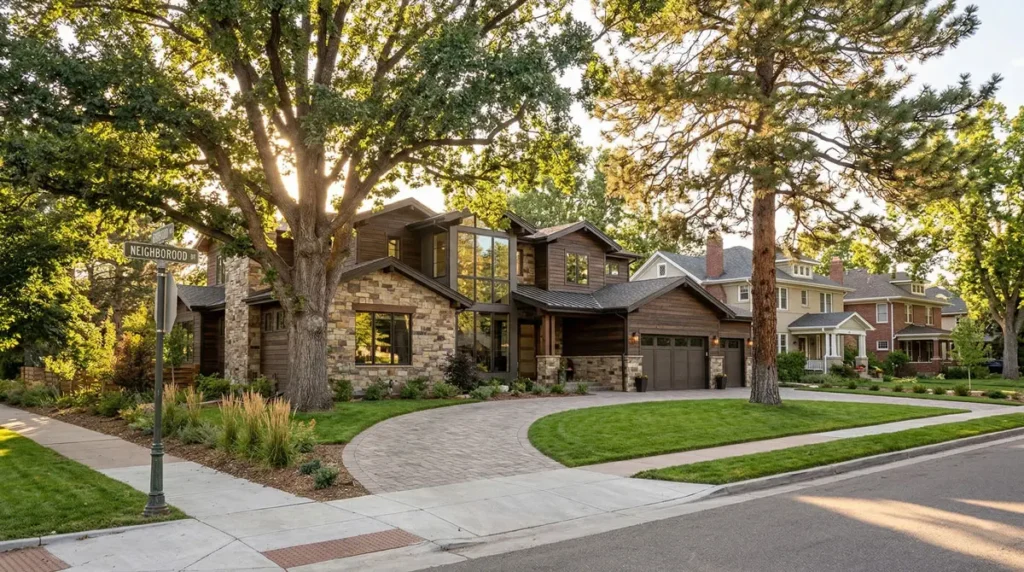
In Denver, custom home construction is concentrated in established neighborhoods like Cherry Hills Village, Greenwood Village, Castle Pines, Evergreen, Golden, and in-town areas like Hilltop and Washington Park. Most custom projects in these communities involve purchasing an existing property and tearing down the existing home to build new.
The Key Differences Between Custom and Production Homes
Design and Personalization
This is the most fundamental difference. A production home is designed by the builder’s team to appeal to a broad market and to be built efficiently. A custom home is designed for you. Your family size, your lifestyle, how you entertain, how you work from home, what you need from a primary suite, how you want to move through the kitchen: all of that informs the design of a custom home in a way that a production home simply cannot accommodate.
Production builders offer customization within limits. You can often choose between a few countertop options, a few flooring options, and a few cabinet colors. But the layout, the ceiling heights, the window placement, the room proportions: those are fixed. What you see is largely what you get.
Location and Lot Selection
Production homes are built where the builder owns land, typically in new developments on the edges of metro areas or in suburban communities. You are choosing a lot within the builder’s project, not a lot in a neighborhood of your choosing.
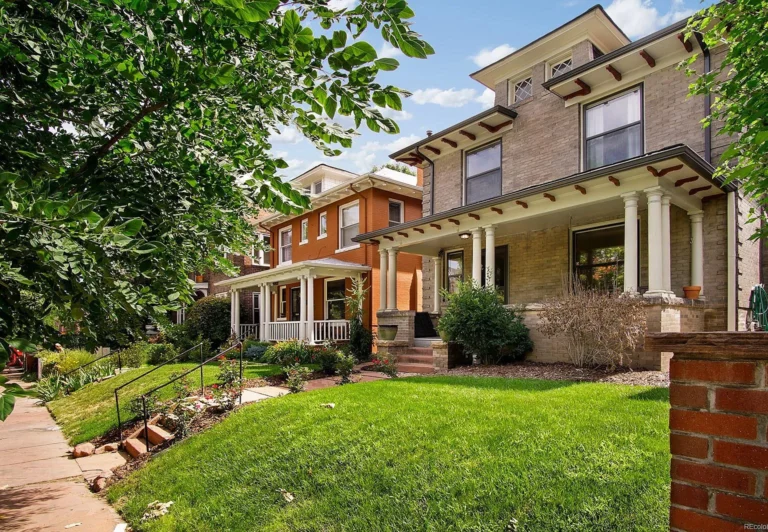
With a custom home, you find the lot or the property first. That means you can build in established neighborhoods with mature trees and existing character, on infill lots in the city, or in the specific community that matters most to you for schools, commute, or lifestyle. Location flexibility is one of the most significant advantages of the custom path.
Quality of Materials and Construction
Production builders are optimized for efficiency and margin. That means standardized materials, standardized systems, and subcontractors who are experienced at building the same thing fast. The results can be perfectly good homes, but they are built to a standard that reflects the economics of volume construction.
Custom builders are building to your standard. The material specifications, the subcontractors selected, and the level of craftsmanship expected are all defined by your project. A luxury custom builder is working with different materials and different tradespeople than a production builder, and the result reflects that.
Builder Relationship and Communication
When you buy from a production builder, you are one of many buyers in that community. You deal with a sales team, a design center coordinator, and a construction manager who is managing multiple homes simultaneously. The owner of the company is not involved in your project.
With a custom builder like Anderson Construction, the owner is your primary point of contact. Ben Anderson is personally involved in every project. That level of access and accountability is a fundamentally different experience than buying a production home.
Timeline
Production homes can be built relatively quickly because the designs are standardized, the materials are pre-ordered, and the subcontractors know exactly what to do. Depending on the stage of construction when you buy, you might take possession in a few months or in under a year.
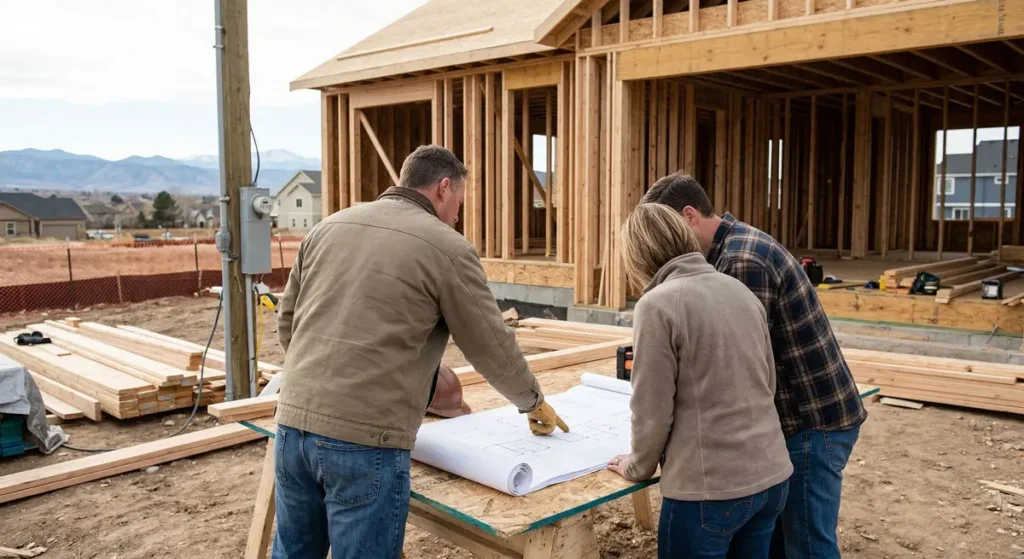
Custom homes take longer. The design process alone takes months. Permitting takes additional time. Construction of a complex custom home in an established Denver neighborhood typically takes 12 to 24 months from the start of design through certificate of occupancy. That timeline is the cost of getting exactly what you want.
Price
Production homes are generally less expensive per square foot than custom homes. Volume purchasing, standardized designs, and efficient construction processes allow production builders to offer competitive pricing. For buyers who are primarily focused on getting a new home with modern finishes at a reasonable cost, production construction can deliver that.
Custom homes cost more per square foot. You are paying for design specificity, higher-quality materials and systems, more skilled labor, and more individual attention to your project. In Denver’s luxury market, custom homes typically start at $1,000,000 in construction costs and go up from there depending on size and finish level.
What the Semi-Custom Category Actually Is
Many builders market themselves as semi-custom, which occupies a middle ground between production and true custom. A semi-custom builder typically offers a set of floor plans but allows more modifications than a standard production builder. You might be able to move walls, change room sizes, or choose from a broader range of finishes.
Semi-custom can be a reasonable option for buyers who want more input than a production home offers but are not looking for a fully designed-from-scratch project. The important thing is to understand exactly what the builder means by semi-custom and where the limits of modification are before you commit.
Which Is Right for You?
The right choice depends on your priorities, your timeline, and your budget. Here are some honest ways to think about it:
A production home may be the better fit if:
- You want to move into a new home within the next year.
- You are comfortable with the floor plan and finish options the builder offers.
- Location within a new community works for your needs.
- Your budget is better suited to the production price range.
A custom home is likely the better fit if:
- You have a specific neighborhood or community in mind.
- The way you live does not fit neatly into a standard floor plan.
- You want high-quality materials and craftsmanship throughout.
- You are building a home you plan to stay in long-term and you want it to be exactly right.
- You are willing to invest the time the design and build process requires.
Frequently Asked Questions
Is a custom home worth the extra cost?
For the right buyer, yes. If you have a specific vision for how you want to live, a specific neighborhood in mind, and a budget that supports custom construction, the result is a home that is genuinely yours in a way a production home cannot be. The question is whether the specific advantages of custom construction, design control, location flexibility, and quality, matter enough to you to justify the additional cost and time.
Can I negotiate with a production builder?
Sometimes. Production builders have more flexibility on upgrades, lot premiums, and closing costs than on base price. The amount of negotiating room depends on how the community is selling and where the builder is in their project. In a slow market, more negotiation is possible. In a hot market, less so.
What does custom home construction cost in Denver?
Custom home construction in Denver’s luxury markets typically starts at $1,000,000 in construction costs for a quality build and goes higher depending on size, design complexity, and finish level. This does not include land. Getting an accurate number requires a specific lot, a defined program, and a proposal from a qualified builder.
How long does a custom home take to build in Denver?
From the start of design through certificate of occupancy, a custom home in Denver typically takes 12 to 24 months depending on the size and complexity of the project and the permitting jurisdiction. Building in a realistic timeline from the start avoids frustration and bad decisions made under schedule pressure.
Do production homes hold their value in Denver?
New production homes in desirable Denver communities generally hold their value reasonably well, especially in the near term. Over a longer period, location is usually the dominant factor. A production home in a highly desirable location will typically outperform a custom home in a less desirable one. The quality and specificity of a custom home can be an advantage in certain markets and certain buyer pools.
Can a production builder match what a custom builder produces?
Not at the same level of specificity. A production builder can build a nice home with good finishes. What they cannot do is design a home specifically for you, build it on a lot in an established neighborhood of your choosing, and give you the personal attention and accountability that comes with a true custom builder relationship. Those are structural differences, not just marketing distinctions.
If you are weighing your options and want a direct conversation about whether a custom home is the right path for you, reach out to schedule a discovery call.