One of the most common questions people have when they start thinking about building a custom home is why the numbers come in where they do. You look at the square footage, you try to do the math, and the total still feels surprising. That is because the per-square-foot calculation only tells part of the …
One of the most common questions people have when they start thinking about building a custom home is why the numbers come in where they do. You look at the square footage, you try to do the math, and the total still feels surprising. That is because the per-square-foot calculation only tells part of the story.
Custom home costs are driven by dozens of decisions and conditions that are specific to your project. Some of them you control. Some of them you discover along the way. Understanding what actually moves the needle helps you make smarter decisions early, allocate your budget where it matters most, and avoid surprises once construction is underway.
This post walks through the real drivers of custom home construction costs, specifically in the Denver market where Anderson Construction has been building since 2006.
Why Cost Per Square Foot Only Tells Part of the Story
Cost per square foot feels simple, which is why it comes up so often. In practice, two homes with the same square footage can land at very different budgets depending on ceiling heights, structural spans, window packages, finish levels, and mechanical systems. A home with large open spans, structural steel, or walls of glass costs more to build than a more straightforward design of the same size.
What gets counted matters too. Some per-square-foot figures include the basement, garage, and outdoor living spaces, and some don’t. Without knowing what’s being measured, two numbers that look comparable often aren’t.
If you want a starting range for your own project, our custom home cost estimator is a good first step. The sections below explain what moves that number up or down.
The Lot and Site Conditions
Before a single wall goes up, the site itself has a significant impact on what your home will cost to build. Two identical house designs on two different lots can have meaningfully different construction budgets based on site conditions alone.
Topography and Grading
A flat lot is straightforward. A sloped lot requires grading, retaining walls, and more complex foundation work. In communities like Evergreen and Golden, where lots often have significant elevation changes and views, the site work alone can add substantially to a project before any framing begins.
Soil Conditions
The Denver metro area has expansive soils in many locations. Expansive clay soils expand when wet and contract when dry, which can cause significant structural movement if not properly addressed. A soils report, which should be done before you finalize your foundation design, will tell you what you are working with. Depending on the results, your foundation may require additional engineering, deeper footings, or a structural system designed to manage soil movement. This is not optional and it is not cheap to skip.
Utility Access and Infrastructure
How far utilities need to run to reach your lot affects cost. A lot with existing connections to water, sewer, gas, and electric at the property line is much simpler than one where those connections need to be extended. In some areas, connecting to public sewer may not even be an option, which means an engineered septic system. These are costs that need to be understood before you purchase a lot.
Teardown and Site Clearing
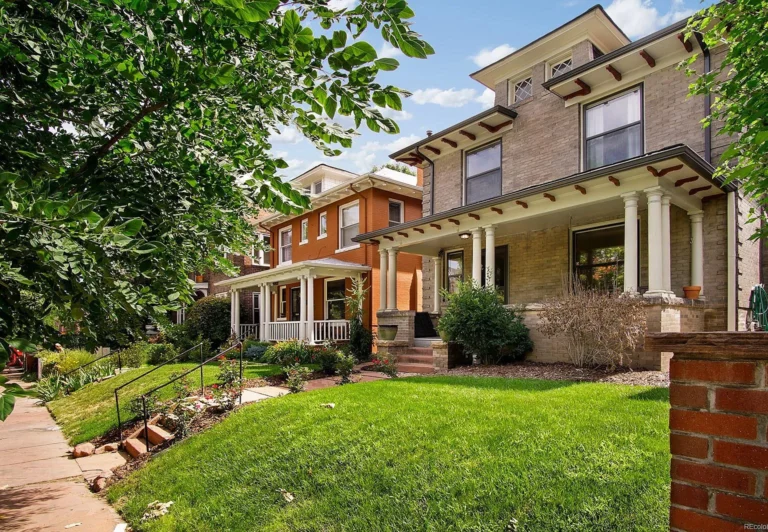
If your project involves demolishing an existing structure, add demolition costs, abatement costs if hazardous materials are present, debris removal, and site preparation to your budget before construction even starts. In established Denver neighborhoods like Cherry Hills Village and Greenwood Village, most custom home projects are teardown rebuilds, and these upfront costs are part of the total investment.
In Cherry Hills Village, where vacant lots are rare, most new homes start this way. See what that involves on our Cherry Hills Village custom home builder page.
Zoning, Setbacks, and Neighborhood Rules
Every lot comes with rules about what can be built on it. Zoning, setbacks, height limits, and neighborhood or HOA design requirements vary widely across the Denver metro, and they shape the size, footprint, and form of the home. Designing within those limits from the start is far less expensive than redesigning after a plan has been rejected.
Design Complexity
The design of your home has a direct and substantial impact on what it costs to build. Complexity is one of the primary cost drivers in custom construction, and it shows up in ways that are not always obvious.
Rooflines and Exterior Form
A simple gable roof is the least expensive roof to build. Every hip, valley, dormer, and change in roofline adds framing complexity, labor, and material cost. A home with a dramatic roofline and multiple intersecting forms is more expensive to build than a home with a clean, simple exterior, even if the square footage is identical. That does not mean complexity is wrong, but it needs to be budgeted for intentionally.
Ceiling Heights and Volume
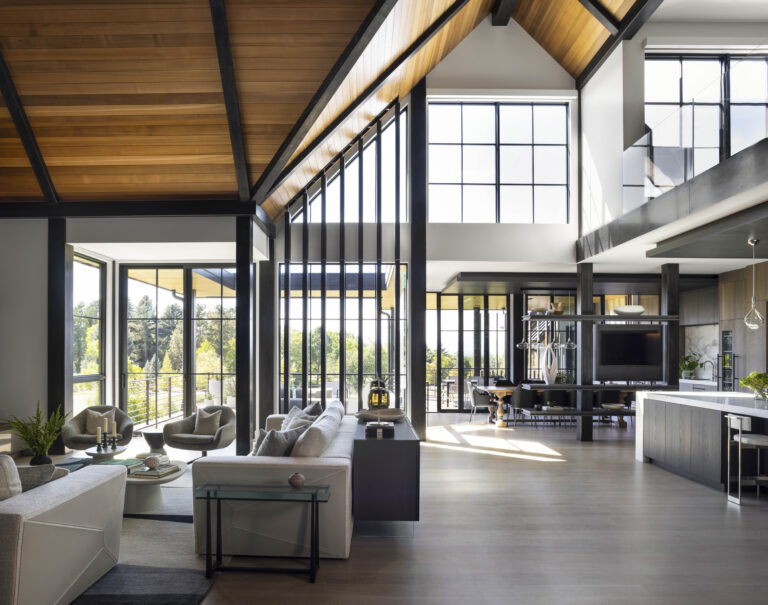
Tall ceilings and dramatic volume add cost in multiple ways. More wall height means more framing, more drywall, more paint, and taller windows that cost more than standard sizes. A two-story great room with a 24-foot ceiling requires more structure, more material, and more labor than a standard 9-foot ceiling throughout. The effect on the finished space can be spectacular, but the cost impact is real.
Angles, Curves, and Custom Details
Anything that deviates from a standard 90-degree angle adds labor and material cost. Curved walls, angled ceilings, custom built-ins, and intricate millwork all require more time from skilled craftspeople. That time is reflected in the price. Custom details are often what make a home feel truly one-of-a-kind, but they need to be prioritized against the rest of the budget.
Finish Selections
Finish selections are where the budget range for a custom home is widest. Two homes with identical floor plans and square footage can land at very different budgets based on finish choices alone. This is one of the most important things to understand early in the planning process.
Cabinetry
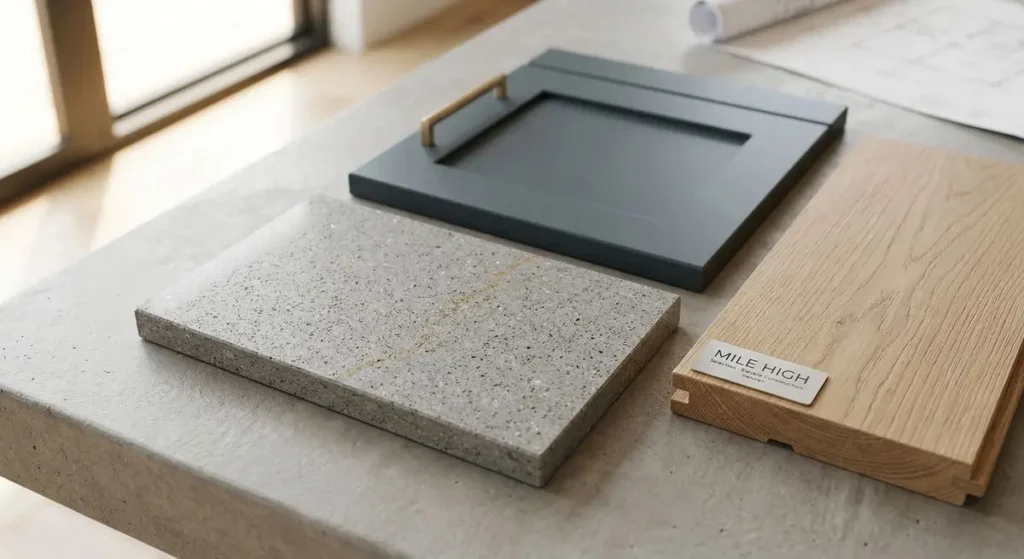
Cabinetry is one of the largest finish line items in a custom home. Semi-custom cabinetry from a quality manufacturer is a fraction of the cost of fully custom cabinetry built by a local cabinet shop. Both can produce beautiful results, but the price difference is significant. In a high-end kitchen, the choice between quality semi-custom and fully custom cabinetry is one of the biggest single swings in the finish budget.
Countertops and Stone
Quartz countertops are durable, consistent, and less expensive than natural stone. Hand-selected marble, quartzite, or granite slabs, especially large-format slabs with dramatic veining, can cost significantly more per square foot and require more skilled fabrication. Across a kitchen and several bathrooms, stone selection alone can move the budget meaningfully.
Flooring
Engineered hardwood, solid hardwood, large-format tile, stone, and custom tile work each have very different price points. Wide-plank solid hardwood throughout a large home is a meaningful budget item. Custom stone flooring with intricate patterns or inlays is more so. Because flooring is priced across every square foot of the home, the difference between options adds up quickly in a larger house.
Windows and Doors
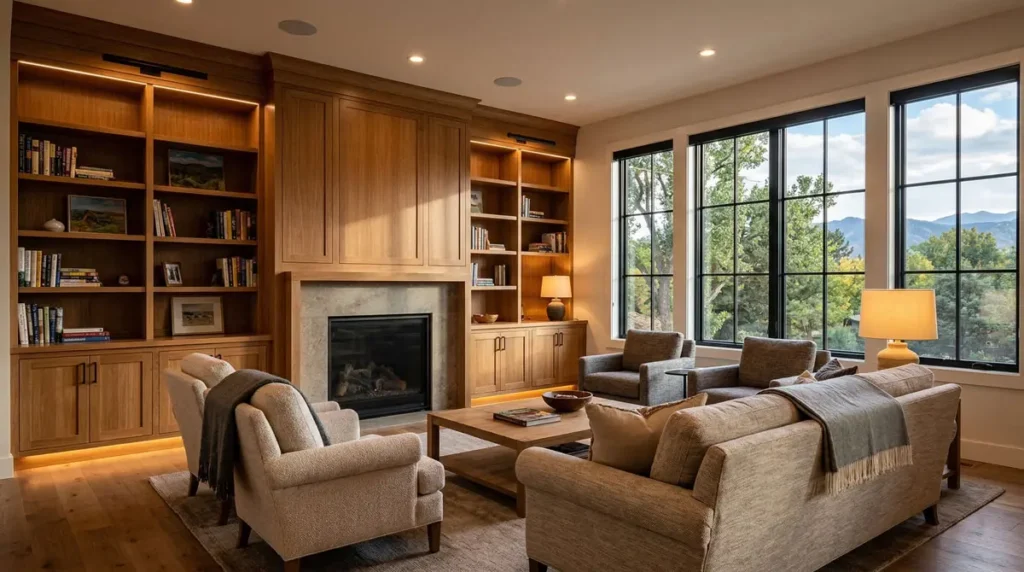
Windows and exterior doors are a significant cost driver that many homeowners underestimate. Large-format windows, multi-panel sliding glass doors, custom wood windows, and European-style lift-and-slide systems are all substantially more expensive than standard residential windows. For a home built around bringing the outside in, the window and door package can become one of the larger line items in the build.
Mechanical, Electrical, and Plumbing Systems
The systems inside the walls of a custom home are not glamorous, but they are expensive, and they are where you do not want to cut corners. HVAC, electrical, and plumbing together represent a substantial portion of a custom home’s budget.
HVAC Complexity
A single-zone forced-air system is the simplest and least expensive HVAC approach. Multi-zone systems, radiant floor heating, dedicated systems for specific spaces like wine rooms or home theaters, and high-efficiency equipment all add cost. In Colorado’s climate, where you need both serious heating capacity and meaningful cooling capability, a well-designed HVAC system is a real investment.
Home Automation and Technology
Integrated home automation, whole-home audio, advanced security systems, structured wiring, and motorized shading are all add-ons that need to be planned for in the design phase and wired during construction. Retrofitting technology after a home is built is expensive and disruptive. The cost of a well-done technology package varies widely with scope, which is why it belongs in the design conversation and not at the end of the build.
Plumbing Fixtures
Plumbing fixture selections span an enormous range. A functional and attractive fixture package is available at very reasonable prices. Designer fixtures, custom hardware, specialty faucets, and high-end shower systems can multiply that cost several times over. The rough plumbing cost is roughly the same either way. The fixture cost is where the range opens up.
Labor and Subcontractor Costs in Denver
Denver is not a low-cost labor market. Skilled tradespeople, including carpenters, electricians, plumbers, tile setters, and finish workers who do high-quality work, are in demand and priced accordingly. This is the reality of building in a major metro with a strong economy and a competitive construction market.
Labor costs also vary with the complexity of the work. Standard framing costs differently than custom millwork. Basic tile installation costs differently than a complex custom tile installation in a master shower. When you are evaluating bids, make sure you understand what level of craftsmanship each line item assumes.
Material Pricing and Market Timing
Material prices and labor availability move over time, and much of that is outside anyone’s control. A number put together today may not hold a year from now if a project sits in design for a long stretch. That isn’t a reason to rush. It’s a reason to plan for it. A contingency isn’t pessimism. It’s an honest acknowledgment that some things can’t be known in advance.
Change Orders and Scope Creep
Change orders are one of the most predictable causes of budget overruns in custom construction. A change order is any modification to the original scope of work after the contract is signed. Some change orders are unavoidable, like when existing conditions are discovered during construction that were not apparent beforehand. Many others are the result of homeowners changing their minds, upgrading selections, or expanding scope once the project is underway.
Every change order during construction costs more than the same decision made during the design phase. Work that has to be undone and redone, materials that were already ordered, schedule impacts, and coordination costs all contribute. The best protection against change order costs is a thoroughly defined scope of work before construction begins.
How to Use This Information When Planning Your Project
The goal of understanding what drives costs is not to minimize every line item. It is to make intentional decisions about where you want to invest and where you are comfortable with a more modest approach. A custom home is a series of trade-offs, and the homeowners who end up happiest with their project are the ones who made those trade-offs consciously rather than discovering them after the fact.
Work with your builder early to understand your priorities, the real cost of different decisions, and where your budget is best spent. When a design is finished without construction input, the numbers sometimes come in well above expectations, and scaling back a completed design can mean starting over or giving up features that mattered. That conversation is far more valuable before design is finalized than after a proposal comes in over budget.
For a starting range on your own project, try our custom home cost estimator. If you’re ready to talk through your lot, your design, and your priorities, learn more about our custom home builds or book a discovery call.
Frequently Asked Questions
What is the biggest cost driver in a custom home build?
There is no single biggest driver. Finish selections, design complexity, and site conditions are all significant. For most projects, finish selections, particularly cabinetry, stone, windows, and flooring, have the widest range and the most direct control by the homeowner. Site conditions and design complexity are often less flexible once a lot is purchased and a design is finalized.
How much does design complexity add to a custom home build?
It can add significantly, and the impact depends on how much complexity is involved. Custom rooflines, tall ceilings, angled walls, and intricate millwork all add labor and material cost. Because it varies so much from project to project, an experienced builder’s input during the design phase is one of the best ways to keep it in check.
Can I save money by choosing less expensive finishes?
Yes, finish selections are one of the areas where you have the most direct control over cost. Choosing quality semi-custom cabinetry over fully custom, quartz over hand-selected marble, and standard window sizes over custom oversized windows can save meaningful amounts without sacrificing the overall quality of the home. A good builder can help you understand where the cost-to-value trade-offs make the most sense.
What are allowances in a custom home contract?
An allowance is a budgeted amount for a specific item that has not yet been selected, like plumbing fixtures, tile, or lighting. If your selections come in over the allowance, you pay the difference. If they come in under, you receive a credit. Allowances are common in custom construction because not everything is selected before a contract is signed. The key is making sure allowances are set at realistic levels based on the finish quality you are actually planning.
How do I avoid going over budget on a custom home build?
The most effective strategies are: define your scope thoroughly before signing a contract, make as many finish selections as possible before construction begins so allowances can be replaced with real numbers, build a realistic contingency into your budget, and resist the temptation to upgrade or expand scope once construction is underway. Change orders during construction almost always cost more than the same decisions made earlier.
Does soil condition really affect cost that much?
It can. In the Denver metro area, expansive soils are common and can require engineered foundation systems that cost significantly more than a standard foundation. A soils report before you finalize your foundation design is an essential step. The cost of the report is minimal compared to the cost of a foundation problem discovered after the home is built.