Signing a contract with a custom home builder is one of the most significant commitments you will make. You are entrusting someone with a project that will cost hundreds of thousands or millions of dollars, take a year or more to complete, and result in the home you plan to live in for years to …

Signing a contract with a custom home builder is one of the most significant commitments you will make. You are entrusting someone with a project that will cost hundreds of thousands or millions of dollars, take a year or more to complete, and result in the home you plan to live in for years to come. Getting that decision right matters enormously.
The problem is that most people have no framework for evaluating a contractor. You meet with a few builders, you look at their websites, you get a general impression, and you go with your gut. Sometimes that works out. Sometimes it does not, and the consequences are painful.
This guide gives you a practical framework for vetting a custom home builder before you sign anything. It covers what to verify, what to ask, what the red flags look like, and what you should expect from a builder who is legitimately qualified for the work.
Start With the Non-Negotiables
Before you go deep on any builder, confirm they meet the basic legal and professional requirements. These are table stakes. A builder who cannot satisfy all of them should not make it to the next round of your evaluation.
Colorado Contractor License
Colorado requires residential contractors to be licensed. Ask any builder you are considering for their license number and verify it through the Colorado Department of Regulatory Agencies. This takes five minutes and tells you immediately whether you are dealing with a legitimate licensed contractor.
An unlicensed contractor cannot legally pull permits in Colorado. If permits are not pulled, your project is not inspected, the work is not documented, and you can face serious problems when you try to sell the home or if something goes wrong.
General Liability Insurance
Ask for a certificate of general liability insurance and verify that it is current. The certificate should name your property as an additional insured for the duration of the project. General liability insurance protects you if someone is injured on your property or if the contractor’s work causes damage to neighboring properties.
A contractor who is vague about insurance, who cannot produce a certificate quickly, or who asks why you need it is a contractor you should not hire.
Workers Compensation Coverage
Workers compensation insurance covers injuries to workers on your job site. Without it, you could be personally liable for medical costs and lost wages if a worker is injured during construction. Ask for proof of workers comp coverage and verify that it covers all employees and subcontractors working on your project.
Evaluate Their Track Record in Denver
Once you have confirmed the basics, you want to evaluate whether the builder has actually done the work you are asking them to do, in the market where you are asking them to do it.
Ask for a Portfolio of Completed Projects in Denver
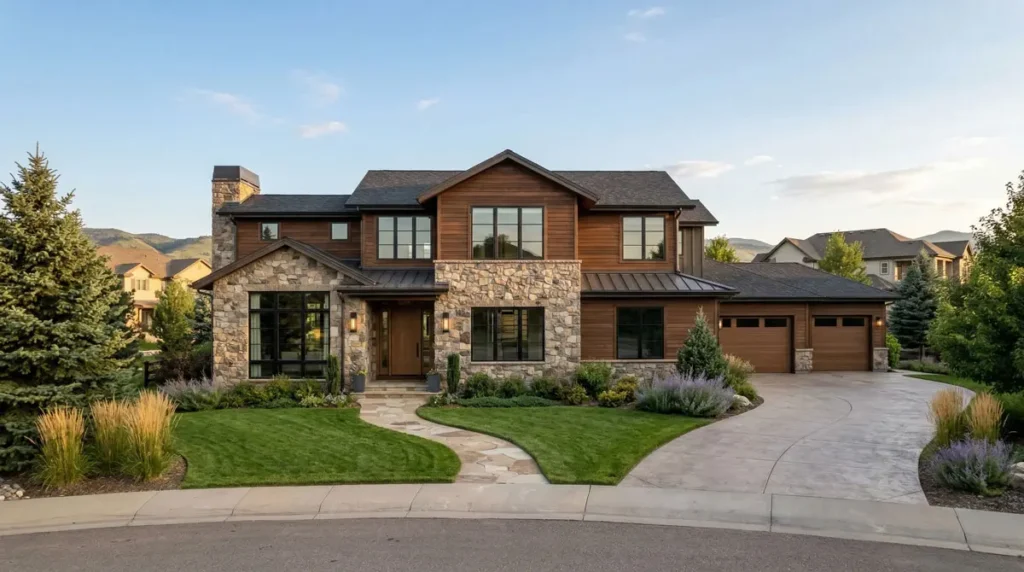
A builder should be able to show you completed projects in Denver, ideally in neighborhoods similar to yours. Photos on a website are a starting point. What you really want is the ability to see finished work in person. Ask if you can drive by any completed homes or if any past clients would allow a brief walkthrough. A builder who has done excellent work in this market will be proud to show it.
Be cautious of builders who show a lot of renderings and in-progress photos but few completed projects. Renderings are what a project is supposed to look like. Completed projects are evidence of what a builder actually delivers.
Verify Their Experience with Projects Like Yours
Experience with residential construction in general is not the same as experience with a luxury custom home in an established Denver neighborhood. If your project involves a teardown and rebuild in Cherry Hills Village, you want a builder who has specifically done that kind of work in that kind of community. The permitting process, the site conditions, the expectations of the neighborhood, and the level of craftsmanship required are all specific.
Ask directly: have you built a project similar to mine in a neighborhood like mine? What were the specific challenges and how did you handle them?
Check How Long They Have Been Operating in Denver
Longevity in a market matters. A builder who has been operating in Denver for 15 or 20 years has weathered multiple economic cycles, has established relationships with quality subcontractors, and has a track record you can actually verify. A builder who is newer to the market or who recently expanded here may have less relevant experience and fewer proven local relationships.
Talk to Past Clients Directly
References are one of the most valuable sources of information available to you, and most homeowners underutilize them. A testimonial on a website is curated. A direct conversation with a past client is not.

Ask for References From Projects Similar to Yours
Request references from homeowners who had projects comparable to yours in scope and market. A builder with a strong track record in luxury custom homes in Denver should be able to provide multiple references without hesitation.
Questions to Ask References
When you speak with references, go beyond the basics. These questions get to what you actually need to know:
- Did the project come in on or close to the original budget? If not, what caused the overrun?
- Was the timeline accurate? Were there significant delays, and how were they communicated?
- How did the builder handle problems when they came up? Were they transparent and quick to resolve issues, or did you have to chase them?
- How was communication throughout the project? Did you feel informed and included?
- Who was your day-to-day contact, and was the owner accessible when you needed them?
- Were there any issues after the home was completed, and how did the builder handle the warranty work?
- Would you hire them again?
That last question is the most direct indicator of overall satisfaction. A homeowner who had a genuinely good experience will answer yes immediately.
Evaluate the Proposal Carefully
The proposal a builder gives you is one of the clearest windows into how they operate. A good proposal is detailed, transparent, and easy to understand. A vague or confusing proposal is a warning sign regardless of how good the builder seemed in conversation.
Look for a Clearly Defined Scope of Work
The scope of work should describe in specific terms what is included in the contract. What materials are being used? What systems are being installed? What finishes are included or specified? The more specific, the better. Vague scopes lead to disputes later about what was and was not included.
Understand How Allowances Are Set
Allowances are budgeted amounts for items not yet selected, like tile, plumbing fixtures, or lighting. They are a normal part of a custom home contract because not everything is selected before a contract is signed. The problem comes when allowances are set unrealistically low to make the total number look attractive.
Ask the builder what the allowances are based on and whether they reflect the finish level you are actually planning. If the allowance for kitchen tile is $5 per square foot and you are expecting designer tile, the allowance is not realistic. Get clarity on this before you sign.
Ask How Change Orders Are Handled
Change orders are modifications to the scope of work after the contract is signed. They happen on almost every project. What varies is how they are priced and communicated. Ask the builder to explain their change order process. Are changes priced at cost plus a fixed fee, or at cost plus a percentage? Are change orders presented in writing for your approval before work begins? Is there a minimum threshold below which verbal approvals are acceptable?
A builder who is transparent about change orders upfront is a builder who handles them fairly when they come up.
Review the Payment Schedule
Payment schedules in construction should be tied to project milestones, not arbitrary dates. You should be paying for work that has been completed, not for work that is planned for the future. A large upfront payment before any work begins is a warning sign. Standard practice is a modest deposit to start, followed by draws tied to specific phases of completion.
Assess How They Communicate
Communication is one of the most common sources of frustration on construction projects. You are going to be living with this builder for a year or more. How they communicate during the sales process is a reasonable indicator of how they will communicate once construction is underway.
Pay attention to these signals early on:
- Do they return calls and emails promptly?
- Do they give you straight answers or hedge everything?
- Do they seem genuinely interested in your project, or are you just another sale?
- Do they ask good questions about what you need and how you want to live?
- Are they transparent about things that might be complicated, or do they gloss over potential issues?
A builder who is hard to reach before you sign a contract is going to be harder to reach once they have your money.
Red Flags to Walk Away From
Some things are serious enough that they should end the conversation:
- Cannot or will not provide a license number or proof of insurance.
- Significantly lower bid than everyone else with no credible explanation.
- Pressure to sign quickly before you have had time to do proper due diligence.
- Vague or verbal commitments about what is included.
- Reluctance to provide references or inability to connect you with past clients who will actually speak with you.
- Request for a large upfront payment before any work begins.
- A portfolio with few or no completed projects, especially in the Denver market.
- Inability to clearly explain how change orders and allowances work.
A Checklist for Vetting a Custom Home Builder
Use this as a practical tool when you are evaluating builders:
- Verified Colorado contractor license through DORA
- Received and reviewed certificate of general liability insurance
- Received and reviewed certificate of workers compensation coverage
- Reviewed portfolio of completed projects in Denver
- Seen completed work in person or driven by completed projects
- Spoken directly with at least two past clients by phone
- Reviewed a detailed written proposal with clearly defined scope
- Confirmed allowances are set at realistic levels for planned finish quality
- Understood change order process and pricing method
- Reviewed payment schedule tied to project milestones
- Identified who the day-to-day point of contact will be during construction
- Confirmed owner involvement level throughout the project
Frequently Asked Questions
How do I verify a contractor’s license in Colorado?
You can verify a contractor license through the Colorado Department of Regulatory Agencies at dora.colorado.gov. Ask the builder for their license number and look it up directly. Verification takes a few minutes and confirms the license is active and in good standing.
How many bids should I get for a custom home?
Getting two to three proposals from qualified builders is a reasonable approach. The goal is not to find the lowest number. It is to understand what different builders include in their scope, how they structure their pricing, and whether their proposals are based on a realistic understanding of your project. Comparing bids only makes sense if they are based on the same scope and the same finish assumptions.
What should a custom home contract include?
A solid custom home contract should include a detailed scope of work, a complete specification of materials and systems, a list of allowances with their amounts, the payment schedule tied to milestones, the process for handling change orders, the project timeline with key milestones, warranty terms, and the process for dispute resolution. If any of these elements are vague or missing, address that before signing.
Is the lowest bid usually the best choice?
Rarely. A significantly lower bid almost always means something is missing from the scope, the allowances are unrealistically low, or the builder is planning to make up the difference through change orders. In custom construction, you tend to get what you pay for. The goal is to find a builder whose price is fair and transparent, not the lowest number on paper.
What questions should I ask a builder before signing?
Ask about their specific experience with projects like yours in Denver, who will manage your project day to day, how change orders are handled and priced, what the allowances are based on, whether you can speak with past clients, and what their warranty covers. Also ask what the most common causes of budget overruns are on their projects and how they prevent them. A builder who answers these questions clearly and confidently is a good sign.
How do I know if a builder’s allowances are realistic?
Ask the builder to explain what each allowance is based on and whether it reflects the finish level you are actually planning. You can also do a quick check by looking at the cost of the products you want to use. If the allowance for kitchen tile is $8 per square foot and the tile you like starts at $25, the allowance is not going to cover your selections. Getting real numbers in place of allowances as early as possible is the best protection.
About the Author
Ben Anderson is the founder and owner of Anderson Construction, a Denver-based luxury custom home builder and renovation company. Ben has been personally leading custom home builds and major renovations in the Denver metro area since 2001, working across Cherry Hills Village, Greenwood Village, Castle Pines, Evergreen, Golden, and established in-town neighborhoods.
Anderson Construction is a licensed Colorado contractor and a member of the National Association of Home Builders. If you are in the process of evaluating builders and want a straightforward conversation with someone who has been doing this work in Denver for over two decades, reach out to schedule a discovery call.